
Zapata Regional Jail Release Destinations
The Zapata County Regional Jail is a county and regional jail operated by the Zapata County Sheriff. A local pretrial detainee may leave after posting bail, receiving a personal bond, a dismissal, or another court order. A sentenced county prisoner may leave after time-served credit or completion of a jail term. A felony defendant committed to the Texas Department of Criminal Justice leaves the county building through transfer, not community release.
Another county, the U.S. Marshals Service, a federal prison channel, an immigration authority, treatment placement, or a hospital may also receive a person. Ask staff for the event type, event date and time, and any receiving agency. The phrase “no longer here” does not distinguish these outcomes. The jail booking-out or transfer record provides the durable starting point, while the court document supplies legal context.
| Outcome | Next verification |
|---|---|
| Bond, dismissal, or time served | Jail release entry and Zapata court file |
| TDCJ commitment | Sheriff transfer entry, then TDCJ intake |
| Federal handoff | Receiving-agency field, federal docket, BOP when applicable |
| Immigration handoff | Sheriff transfer record, then ICE locator or ERO |
| Other placement | Named receiving authority, subject to disclosure limits |
Confirm Zapata Regional Jail Releases
No official Zapata County online jail roster, release log, booking card, or 24-hour or 72-hour list was found. The official Sheriff page sends custody users to VINE. That makes VINE the county-endorsed public status channel, but not the certified jail ledger. The direct jail line and written record remain necessary when timing or destination matters.
- Confirm the person’s full name and approximate booking date. Use a booking or cause number if one is known.
- Search Texas VINE and record the exact agency, status, event date, and search time.
- Call the Regional Jail at 956-765-8615. Ask whether the episode ended in release to the community or transfer.
- Request the receiving agency by name. Search that agency after allowing for intake and data lag.
- Check the correct county court for the bond, dismissal, judgment, sentence, or commitment order.
- Request the Sheriff’s booking and release sheet when a lasting or exact record is needed.
A dropped name does not prove community release. It may reflect transfer, data delay, spelling, restricted information, or a move outside the search’s coverage.
Zapata Regional Jail Release Records
The Zapata County directory gives the official address and direct phone for the jail. Some unofficial directories show a different street number, so use the county listing and call before an in-person visit. The county does not publish release-desk hours, a dedicated jail-record email, or a release-record fee chart.
Zapata County Regional Jail2301 Kennedy
Zapata, TX
Phone: 956-765-8615
Fax: 956-765-3242
Release-desk hours: not published
The directory screenshot displays both county jail listings and their distinct telephone numbers.
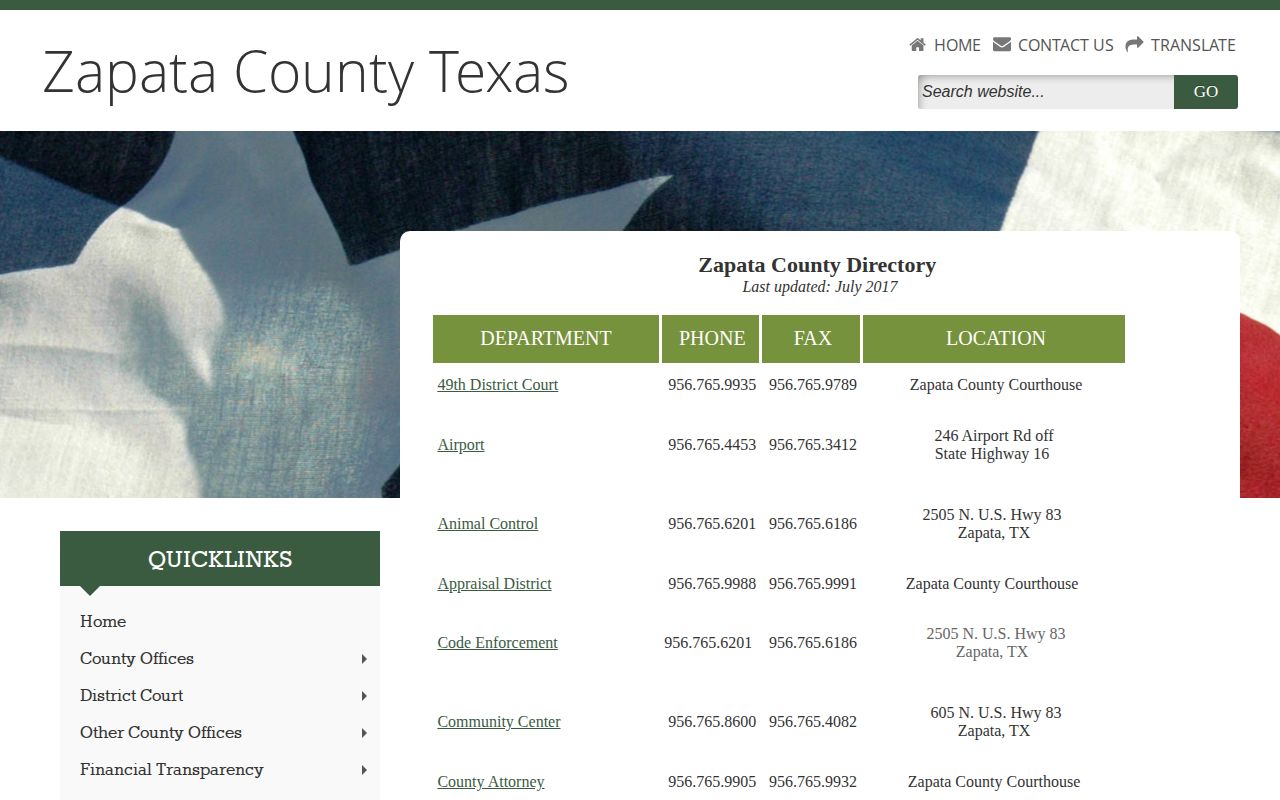
The separate entries help prevent a Regional Jail call from being treated as a complete check of the Women’s Jail.
For a written jail record, route the request through the Sheriff at 200 E. 7th Avenue, Suite 415, Zapata, TX 78076; phone 956-765-9960; fax 956-765-9941. Call to learn the accepted written-delivery method. Ask for electronic copies and an itemized estimate before work exceeds a stated cost ceiling.
Zapata Regional Release Record Fields
A purpose-focused request should identify an existing booking episode instead of asking staff to create an explanation. Request the booking and release sheet for the named person and approximate period. The county does not publish its internal labels, so describe the information needed without claiming that every item is stored under a particular field name.
- Booking number, date, and time
- Arresting agency, charge, and cause number
- Bond amount or bond status
- Release date, time, authority, and type
- Transfer destination or receiving agency
- Booking photograph as a separate requested item
The Texas Public Information Act governs access to existing government records subject to exceptions and other law. Redactions may apply to confidential identifiers, juveniles, victims, medical information, security facts, active-law-enforcement material, and sealed or expunged records. Ask for the segregable public fields if one part cannot be released.
Zapata Regional Release Court Records
A release entry tells when the jail episode ended. The court record can explain why. Class A and B misdemeanor records route through the Constitutional County Court and County Clerk. Felony proceedings and judgments route through the 49th District Court and District Clerk. Useful entries include bond posted, personal bond, dismissal, plea, judgment, sentence, jail-time credit, commitment, and a capias recalled or issued.
The legal order and physical event may occur at different times. Treat a docket entry as authority and context, then use the jail timestamp as proof of booking-out. A bonded release also does not close the criminal case. The person must still comply with the court process, and failure to appear can result in bond forfeiture and a capias.
Zapata Regional Jail Transfer Records
Transfer questions have unusual local weight. A Texas Commission on Jail Standards report dated July 1, 2022, recorded 193 occupants at a stated 240 capacity, including 162 contract occupants and 31 local occupants. An archived Justice Department table also documents historical federal prisoner use. These figures are dated context. They are not a current census, release count, average stay, or proof of a present federal contract.
The figures show why a caller should ask about custody destination. A person sent to TDCJ may appear in the current state-prison search after intake lag. A federal pretrial transfer may be handled by the U.S. Marshals Service and may not appear in the sentenced-prisoner BOP locator. An ICE detainer can lead to an immigration handoff rather than a community release.
Note: Dated population figures explain the facility’s past custodial mix but cannot establish any individual’s present status.
Regional Jail Property Receipts
Texas Local Schedule PS identifies prisoner property inventories and receipts as official local records. Item PS4200-12 includes return of nonconfiscated property at release and requires a minimum retention period of release or transfer plus two years. A person disputing what was returned can ask the Sheriff for the signed inventory or receipt linked to the booking.
No official source states the Regional Jail’s current exit door, property counter, pickup process, family waiting area, release times, weekend rules, or gate-money practice. Those facts should be confirmed directly rather than borrowed from another Texas jail. The retention rule identifies a record category; it does not invent a local desk procedure.
About Zapata Regional Jail
The Sheriff is the local operating authority. The official directory uses the name Zapata County Regional Jail and the 2301 Kennedy address. Its “regional” name and historical contract population do not change the need to identify the authority behind each booking. A local court defendant, another county’s detainee, and a federal contract prisoner can require different post-departure searches.
Texas VINE can support a custody check. The Sheriff release or transfer sheet remains the bridge to the next system. TDCJ incarceration history is appropriate for a state-prison transfer. The BOP locator applies to many sentenced federal prisoners, while the federal docket may be more useful for a pretrial USMS movement. ICE uses a separate locator and field-office route. The full Zapata County released-inmate search explains those channels and the complete records-request path.
The Regional Jail and Women’s Jail have separate county directory entries and separate direct telephone numbers. A search should not assume the Regional Jail handled every Zapata booking. Ask which building created the record before filing a request. If VINE lists an agency but not the expected building, compare the booking details and call both official contacts rather than merging similar names or records.
When immediate travel is planned, call the jail before leaving. No public release schedule or waiting-area policy was found. Confirm the location, whether release processing is complete, and whether the person will actually exit this building. A projected time, VINE alert, or court order may precede the physical event.
Physical departure can also lag behind the court action that authorizes it. Jail staff may still need to verify identity, review holds, complete release paperwork, return property, and coordinate a receiving authority. No official timing standard is published for these steps. The safest record sequence is the filed court action, the jail’s completed booking-out timestamp, and any later receiving-agency or supervision record.