
Zapata Parole and Probation Compared
Parole is discretionary conditional release from a Texas Department of Criminal Justice prison before the sentence reaches its end. Mandatory supervision is a separate statutory release path based on calendar time, good-conduct time, eligibility rules, and, for later offenses, Texas Board of Pardons and Paroles review. Probation, called community supervision in Texas law, is ordered by a court and managed by a local community supervision and corrections department. A person on probation may never have entered TDCJ.
| Question | Parole or mandatory supervision | Probation |
|---|---|---|
| Who orders or decides it? | Texas release law and Board process | The sentencing court |
| Who administers it locally? | TDCJ Parole Division | Webb County CSCD Zapata Office |
| Core proof | TDCJ status, release history, office assignment | Judgment and community-supervision order |
| Public name search | Current TDCJ details and status channels | No statewide public probationer search identified |
| How it ends | Discharge, revocation, or sentence expiration | Court-defined completion, modification, or revocation |
- Parole
- Conditional community release after state-prison confinement.
- Mandatory supervision
- A distinct release mechanism controlled by statute, eligibility, time credits, and sometimes Board approval.
- Probation
- Court-ordered community supervision that may be imposed without a prison term.
- Discharge
- The formal end of the controlling sentence or supervision term.
Verify Zapata Post-Release Supervision
Start with the underlying case and custody system. A person who left either Zapata County jail on bond may have release conditions but is not automatically on probation. A state prisoner with a favorable parole vote is not physically released until TDCJ completes its audit, calculates the scheduled date and location, and clears holds. The official record must show the completed event.
- Check the criminal judgment or docket. Identify whether the sentence imposed community supervision or a TDCJ term.
- For a TDCJ case, use the official offender details and parole-status telephone channel. Distinguish eligibility, Board review, scheduled release, and actual release.
- Ask the Laredo District Parole Office whether it is the correct assigned office and what procedural information can be disclosed.
- For probation, confirm the supervision order through the County Clerk or District Clerk, based on the case level.
- Contact the Webb County CSCD Zapata Office for permitted procedural confirmation. It is not a public inmate locator.
- If the person cannot be found, check current custody and court or warrant records. Do not label the person an absconder based on absence alone.
A favorable parole decision, eligibility date, or scheduled date is not proof that a Zapata County person physically left TDCJ custody.
Zapata Parole Office in Laredo
Zapata County maps to TDCJ Parole Division Region IV’s Laredo District Parole Office. The mapping is a strong routing fact, but it does not mean every person connected to Zapata reports there. An approved release plan, residence, transfer, and supervision administration can change the actual assignment. Call before sending documents or appearing at the office.
Laredo District Parole Office6020 McPherson Road, Suite 6
Laredo, TX 78041
Phone: 956-724-1933
Fax: 956-724-2146
Confirm assignment and reporting instructions
The office supervises parole and mandatory-supervision cases. It does not keep the county jail’s booking-out record and is not the right office for a locally ordered probation sentence. Personal supervision details may be restricted, so ask focused questions about office assignment, record routing, or official instructions.
The TDCJ offender-information telephone page lists the locator and parole-processing routes. Before a Board vote, the parole prereview number is 844-512-0461. After a vote and during release processing, the number is 512-406-5202. The general locator numbers are 936-295-6371 and 800-535-0283, with published weekday hours from 8 a.m. to 5 p.m.
The official Laredo office page shows the Zapata-area parole contact and office details.
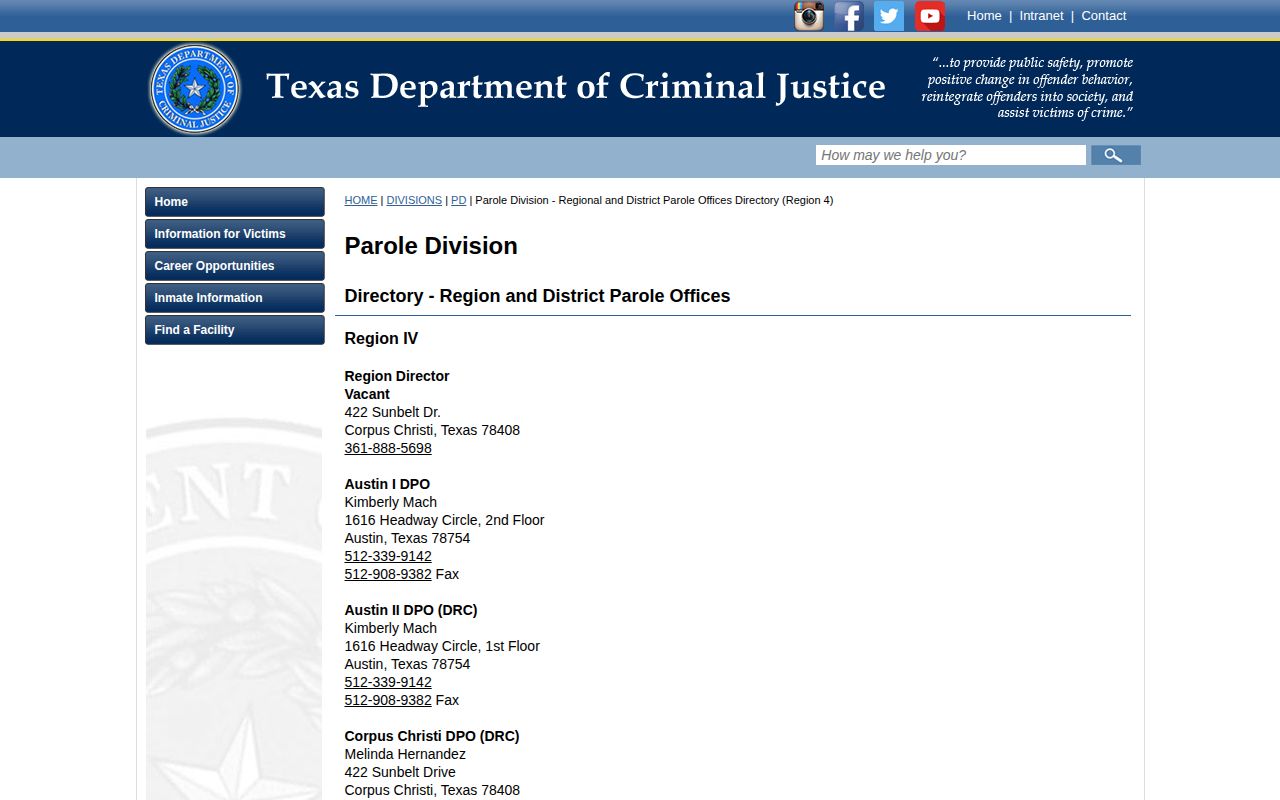
The local office listing helps route a confirmed state-supervision matter after the TDCJ record is identified.
Zapata Probation Office Records
Court-ordered probation is handled through the Webb County CSCD Zapata Office inside the Zapata County Courthouse. The local page names Monica L. Benavidez as the Zapata CSCD Supervisor. The office belongs to the judicial and local community-supervision system, not TDCJ Parole Division. A request about a probation term should begin with the filed judgment and supervision order.
Webb County CSCD, Zapata Office200 E. 7th Avenue, Suite 348
Zapata, TX 78076
Phone: 956-765-9936
Fax: 956-765-9934
Confirm local hours before visiting
The local office does not separately post its hours. The parent department lists weekday hours, but callers should confirm the Zapata schedule. No public statewide probationer-name search was found. The supervising office may have disclosure limits, while the County Clerk or District Clerk can supply the filed document that established the sentence.
Zapata Parole Review Has No Calendar
Ordinary Texas parole and mandatory-supervision release review does not use a formal public hearing calendar. The Board’s panel FAQ says members vote the file rather than holding a formal release hearing. TDCJ Parole Division generally identifies a case about six months before initial eligibility and about four months before a later review date. An institutional parole officer interviews the prisoner and develops a summary for a three-member panel.
Two matching votes decide the case, or the third member resolves a split. Approval codes can set release when eligible, in a future month, or after a program. Denial codes can set another review or require service of the balance, subject to applicable law. An approval code still is not an actual-release entry. Classification and Records must audit the certificate, calculate the date and location, and clear holds.
The Board review-process page shows how a case moves through review.
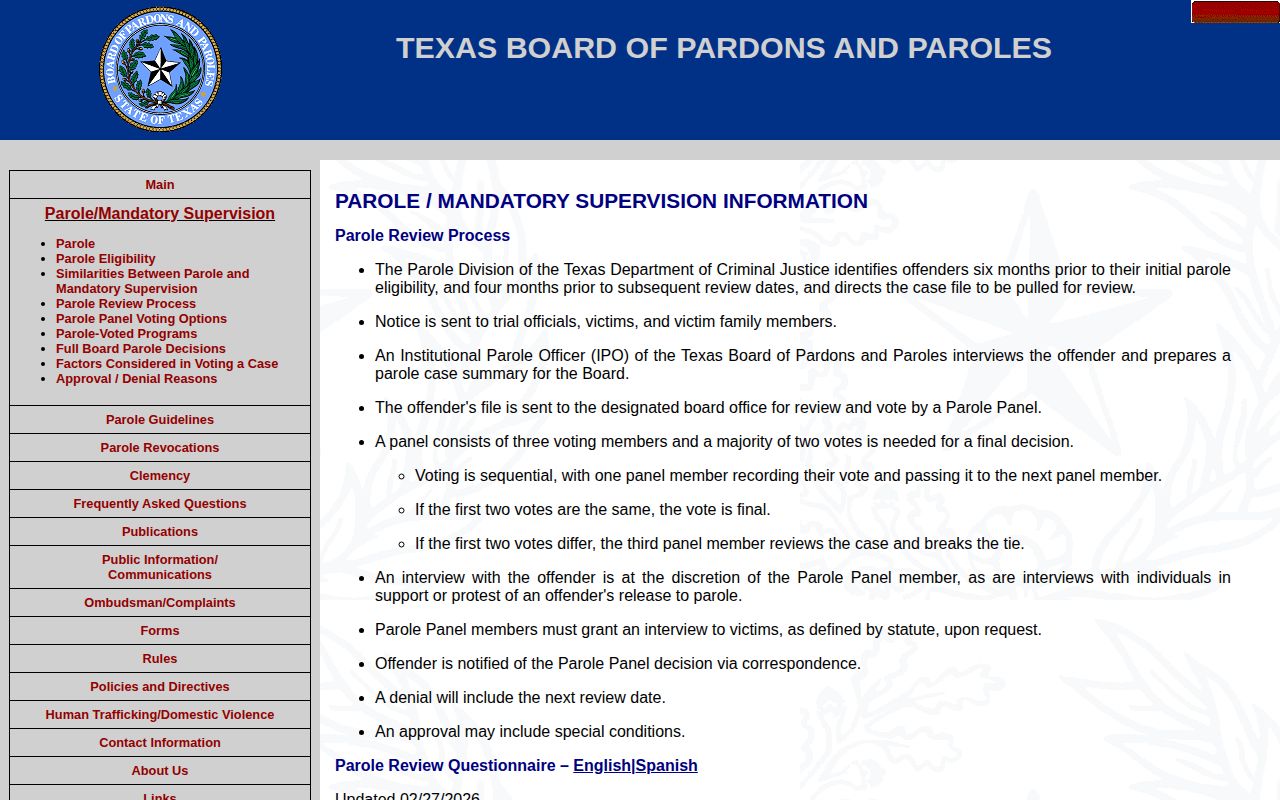
The panel process explains why a review status must be followed through release processing before anyone claims the person is out.
Zapata Absconder and Warrant Checks
TDCJ defines an absconder as a person on parole or community supervision who fails to report and cannot be located well enough to continue supervision. The label is not the same as a new conviction, a completed revocation, or present jail custody. No official Zapata County public absconder-name list was found.
Use three sources instead. Ask the appropriate supervision office about the procedure it can disclose. Check the correct court record for a warrant, capias, motion, or revocation filing. Search current custody through VINE, the county jail, or TDCJ based on the suspected system. A missed appointment, a blank web result, or secondhand information cannot establish revocation.
Note: A capias is a court order directing that a person be taken into custody; it does not itself prove the arrest occurred.
Zapata Supervision Violation Outcomes
An alleged parole violation can lead to an administrative revocation process. The result may continue supervision with no added sanction, continue it with conditions, place the person in an intermediate sanction or treatment facility, or revoke release and return the person to prison. A three-member panel decides by majority, and the supervising officer conveys the outcome. Placement can explain why a person once in the community is no longer there without supporting a claim that a new conviction occurred.
Administrative revocation hearings are different from ordinary parole release review. Revocation involves an actual hearing after alleged violations, while the initial release review is a file vote. The TDCJ Parole Division Central File Coordination Unit handles requests for available revocation records. Current fees for hearing recordings should be confirmed before ordering.
Probation violations return to the sentencing-court process. The filed motion, order, and later judgment provide the legal result. The CSCD office administers supervision but does not replace the clerk as the custodian of the court’s final orders.
Zapata Release Property After Supervision
A supervision question can overlap with unresolved jail property or an incorrect booking entry. Texas Local Schedule PS recognizes prisoner property inventories and receipts, including return of nonconfiscated property at release. Item PS4200-12 sets a minimum retention of release or transfer plus two years. A request should identify the person, booking episode, and property at issue.
The Sheriff, not the parole or probation office, is the proper custodian for a Zapata jail property receipt. A factual correction request also belongs with the agency that created the record. Neither process is the same as expunction or nondisclosure, which depends on a court order and Texas eligibility law.
When Zapata Supervision Ends
Discharge means the applicable sentence or supervision term has formally ended. It should not be inferred from silence, a move, the end of frequent reporting, or disappearance from a current-only search. For a former TDCJ prisoner, request official incarceration history through the TDCJ offender-information email route. Pair it with the parole record when the exact supervision end matters.
For probation, obtain the closing or discharge order from the clerk that holds the criminal case. Misdemeanor records generally route through the County Clerk and Constitutional County Court. Felony judgments and proceedings route through the District Clerk and 49th District Court. The full Zapata County released-inmate search explains how those court records connect to the jail’s physical-release entry.
One record rarely answers every question. The judgment defines the sentence. TDCJ or CSCD administers the term. The jail or prison record shows the custody event. Final verification comes from matching those records without treating an eligibility date, Board code, or blank locator as a completed discharge.