
No Zapata 72-Hour Release Feed
The official Zapata County Sheriff page offers Texas VINE but no jail roster, three-day release view, or released-person archive. No separate 72-hour URL, public search form, weekend refresh schedule, field inventory, photograph channel, or retention period can be reported. This is not a gap to fill with an unofficial list. It is the central fact that determines how a three-day check must be done.
VINE can help locate a named person or report an agency-fed custody change. It does not provide a public bulk list of every person whose Zapata County custody ended over three days. A negative result also does not prove community release. The source may lag, the name may not match, or the person may have transferred. The useful fallback is a defined records interval backed by direct checks for the people of concern.
The official Sheriff source establishes that the county directs custody inquiries to VINE while providing no recent-release navigation.
The manifest image captures the official Zapata County Sheriff source:
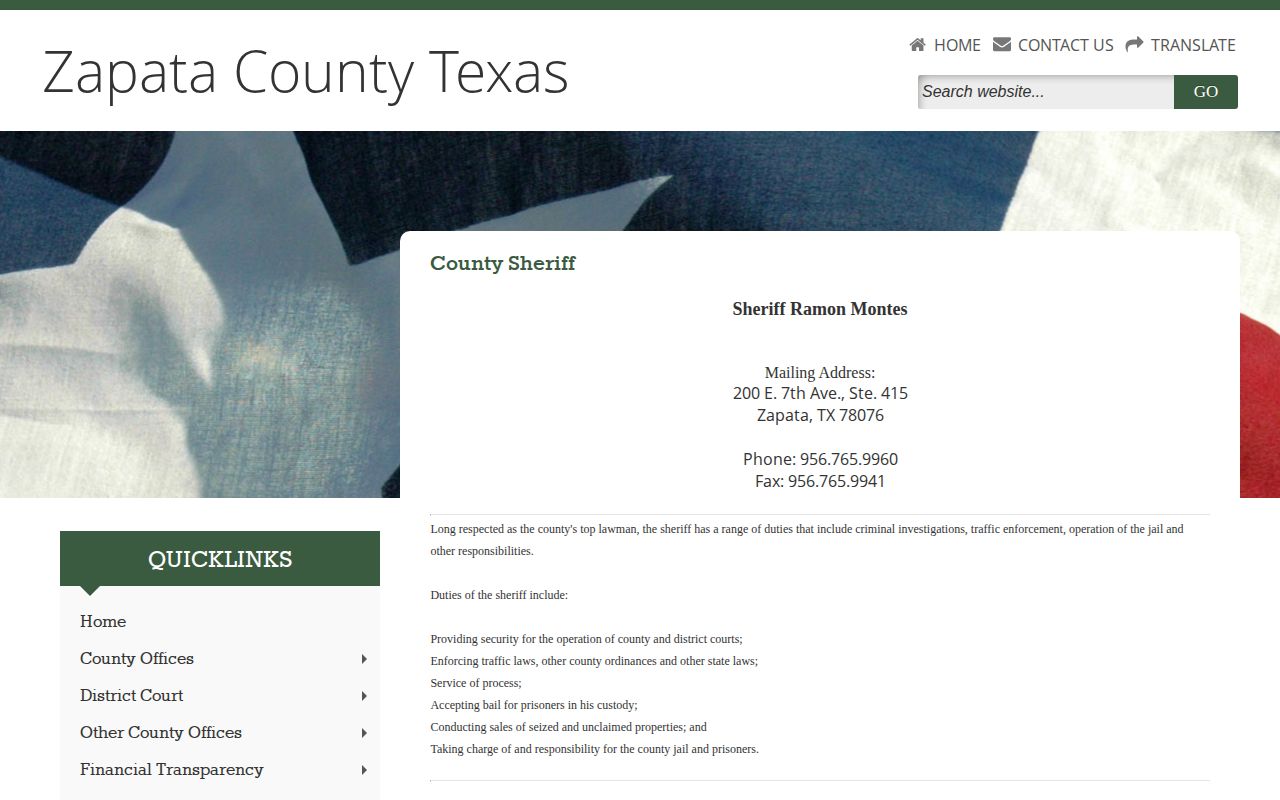
The screenshot supports the no-feed fallback and should not be read as a 72-hour roster or release report.
Build Zapata County’s Release Window
A three-day range needs fixed boundaries. “The last 72 hours” can mean a moving period counted backward from the present time, while “the last three days” may mean three calendar dates. State the start and end in Central Time. Inclusive calendar dates are often easier for a records custodian to apply, especially when the requested span crosses a weekend or holiday.
- Write down the exact start and end timestamps, including Central Time.
- Search Texas VINE for each named person rather than expecting a public bulk report.
- Call the proper Zapata County jail and ask if county custody ended during that range.
- Ask whether the event was release to the community or transfer to a named receiving agency.
- Review the court case for a bond, dismissal, judgment, sentence, or order that may explain the event.
- Request a booking-out, release, or transfer report for the defined interval when a broader record is needed.
The county directory lists the Regional Jail at 956-765-8615 and the Women's Jail at 956-765-9981. Call rather than infer which building held the person. If only today's events matter, the Zapata County 24-Hour Releases sequence uses a tighter same-day cutoff.
Note: A moving 72-hour period and three complete calendar days can produce different sets, so state the intended boundaries in every request.
Zapata 72-Hour Release Record Fields
Zapata County has no published online field set for a 72-hour list. These are request fields drawn from the research inventory, not labels promised by the local jail system. The goal is to identify each custody-ending event in the interval and avoid combining release and transfer into one misleading group. Ask for existing records rather than requiring staff to create a new analysis.
| Requested field | Purpose in the three-day review |
|---|---|
| Full name and identifiers | Separates people with similar names and helps match a booking. |
| Booking or intake number | Connects the exit to one county custody episode. |
| Booking date and time | Shows when the episode began. |
| Charge and court cause | Points to the case that may explain the release authority. |
| Release or transfer date and time | Tests whether the event falls within the fixed 72-hour range. |
| Release type or authority | Distinguishes bond, time served, court order, dismissal, sentence completion, and other stated outcomes. |
| Transfer destination | Identifies the next agency when the person did not return to the community. |
The legal event and the physical exit may have different timestamps. A court can sign an order before the jail completes identification checks, paperwork, property return, or a receiving-agency handoff. The Zapata County Clerk links the county case-search route for applicable matters. A docket entry helps explain the release but does not replace the booking-out time recorded by the Sheriff.
Zapata Weekend Release Timing
The value of a 72-hour inquiry is coverage, not access to a hidden county feed. A person may be released late on Friday, processed during the weekend, or checked only after county offices reopen. A three-day interval can capture those events in one request. It can also account for the gap between a court event and the later physical departure from a jail.
No official Zapata County weekend publishing cadence exists because no public release list was found. Nothing in the research supports a claim that Saturday or Sunday events appear on a Monday page, or that a holiday creates a set delay. VINE is agency-fed and may lag, while court and records offices operate on their own schedules. The correct response to uncertainty is to preserve the full interval and verify after normal office access resumes.
A holiday range should name every included date rather than just saying “holiday weekend.” If precision matters, include 12:00 a.m. at the start and 11:59 p.m. at the end, Central Time. Ask whether the report uses the physical release timestamp or the court-order time. These small details keep the three-day set from shifting unnoticed.
VINE in Zapata Release Checks
The Sheriff links Texas VINE as the county custody-status channel. Search it by person and agency, and record when the check was made. A custody-change result can provide timely notice, yet it is not a certified historical jail record. VINE should also not be treated as a public report of all releases during a chosen date span.
When a VINE event appears, call the jail and ask for the event type and timestamp. If it does not appear, do not stop. Confirm the spelling and identifiers, then ask the jail whether the person is still in Zapata County custody. If not, ask whether the person entered the community or another custody system. A receiving agency must confirm the next step when the answer is transfer.
For one known person with no need to reconstruct a group, the Zapata County release search separates county, TDCJ, federal, and immigration routes. That distinction matters because the current TDCJ online search covers prisoners currently in a TDCJ facility, not a permanent list of former state prisoners.
Note: Treat a VINE event as notice to verify, then obtain the Sheriff record when the exact release or transfer time must endure.
Why Zapata Releases Lack Archives
Zapata County stands apart because its official Sheriff page offers VINE without a public roster or a 24-hour or 72-hour archive. There is no published refresh lag. There is no post-release display period. There is no county field list. That means a name cannot be expected to stay online for three days, and a researcher cannot compare snapshots of an official roster that does not exist.
This ANGLE E finding makes the fallback chain essential. Start with VINE for a named person. Call the jail for release-versus-transfer. Read the court disposition for the legal event. Request the booking-out record for the physical timestamp. If another agency received the person, follow that agency's custody system. Each step answers a limited question, and the combined record is stronger than any one blank search.
Local reporting has mentioned Sheriff social-media use for operational notices, but the official county page does not link an account and no source shows routine release or mugshot posts. Social media and news cannot be promoted as a Zapata release ledger. They may offer context, but only the responsible agency can confirm custody.
Request Zapata Three-Day Release Records
Address a written request to the Zapata County Sheriff for existing records covering the defined interval. One practical scope is: booking-out, release, and transfer entries for people whose county jail custody ended between the stated start and end timestamps, including the exit time, event type, and receiving agency. Ask for electronic delivery and a cost estimate before work exceeds a stated amount. If no compiled three-day report is maintained, ask for responsive jail-register entries or narrow the request to named booking episodes.
The Sheriff mailing address is 200 E. 7th Avenue, Suite 415, Zapata, TX 78076, and the office phone is 956-765-9960. Zapata County does not publish a dedicated Sheriff Public Information Act form, email, portal, hours, or fee chart. Call first to confirm which written-delivery method is accepted. Keep proof of delivery and avoid sending identifiers that are not needed to locate the record.
Texas Government Code Chapter 552 governs the public-information process. A request should identify records, not demand that staff answer questions or create analysis. The familiar ten-business-day period generally relates to an agency seeking an Attorney General decision to withhold information; it is not a promise that every record arrives within ten days. Clarification, deposits, closures, redaction, volume, and legal review can affect timing.
Older Zapata Release Records
Texas Local Schedule PS supplies a records path after any short-lived agency display is gone. PS4200-06 identifies the county jail register as permanent and says its basic entries include the name, sex, intake number, reason for commitment or confinement, and release or transfer date. PS4200-10 covers prisoner incarceration records, including booking-in and booking-out forms and commitment, transfer, or release orders, with a minimum retention of release or transfer plus two years.
Those retention periods are floors, not public-access guarantees, and they do not prove that every requested field was recorded. Ask for the permanent register entry first when the episode is old. Then ask whether detailed release paperwork or an image remains in the jail-management or imaging system. A records custodian may redact protected material or apply an exception, but a focused request can still seek segregable public fields.
Finally, match the record to the custody system. A transfer to TDCJ is not a Zapata community release. A federal move may require BOP or federal court follow-up, and immigration custody requires the ICE route. A blank county search proves none of those outcomes. The Sheriff release or transfer entry should name the next agency when one received the person.
Note: For an old three-day interval, the permanent jail register may survive even when more detailed booking-out paperwork no longer does.